Depicting the Underworld: Hades, Hel, and the Inner Dark
For as long as humans have laid down pigment on stone, we have been painting the places we cannot see. The underworld is the oldest of those imagined geographies, a downward mirror held up to the daylight world. Across continents and centuries, artists have tried to give it shape: the bone-white meadows of Hades, the mist-walled hall of Hel, the serpent-haunted caverns that open beneath the feet of every dreaming soul.
Imelda Almqvist paints from a place that sits close to that threshold. Her shamanic work treats descent as a real practice, a journey undertaken with care rather than metaphor alone. That conviction shapes her colour choices, the layering of veils, and the recurring motifs of skulls, roots, and dark mirrors that run through her collections. To stand before one of her canvases is to feel invited into a conversation with what lies beneath.
Australia has its own long memory of the below-world, threaded through living Indigenous traditions. The Dreamtime is an ongoing spiritual architecture, and many of its stories describe ancestral beings slipping beneath the skin of the earth, forming waterholes, ranges, and hidden passages. Walk into the Art Gallery of New South Wales or the Ian Potter Centre and you will see desert painters rendering those same descents, where a single sinuous line can carry a spirit from sky country down into the roots.
Down here, the line between gallery and ceremony thins. The art of the underworld demands something of the painter: a willingness to sit with the uncomfortable, the unfinished, and the unnamed. It also asks for technique suited to darkness, because black is not simply the absence of light but a substance with its own texture, weight, and breath.
Hades and the Greco-Roman descent
The Greek underworld arrives in painting already rich with centuries of description. Rivers named Styx and Lethe, the three-headed hound Kerberos, the shadowy crowds of the dead pressing like reeds beside the Acheron. When Imelda works with Hades, she tends to slow the narrative down. Her Hades is not a place of punishment so much as a place of pause, where souls weigh what they carried and what they left behind.
The Fates cast lots there too, and the click of knuckle-dice on the bank of the Styx has long been the poet's shorthand for chance under the earth. That older grammar of wager and risk still pulses through contemporary art, where a hand of cards laid out on a shroud can carry the same charge as any lyre-playing Orpheus. A multihand wager piece on the site extends that metaphor into the studio, treating each round as a soul weighing its next crossing.
Hel: the cold half of the Norse cosmos
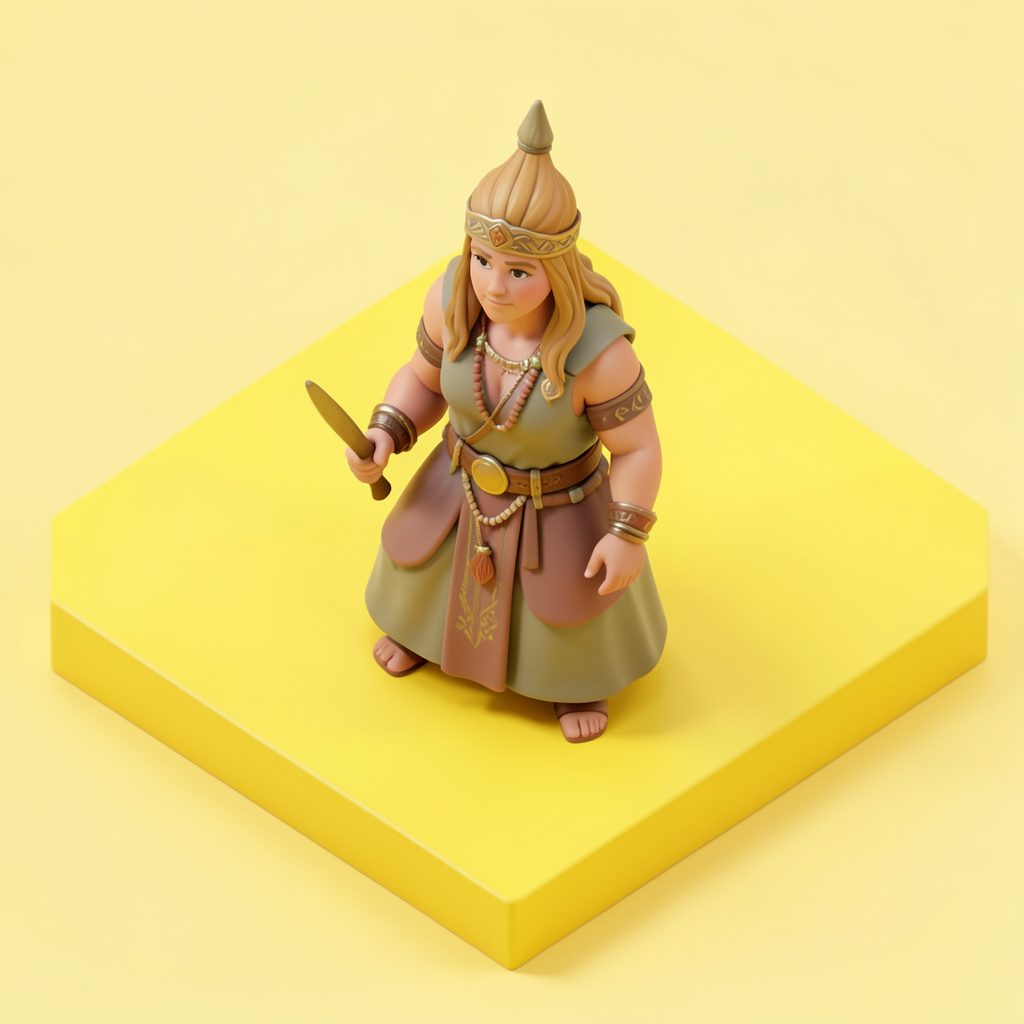
Norse mythology splits its afterlife between Odin's bright hall and Hel's quieter realm beneath one of the three roots of Yggdrasil. Hel is ruled by a being of the same word, half flesh, half bone, and her hall is called Éljúðnir, "storm-cooled". There is a chill here that painters must translate, a stillness that is not emptiness but held breath.
Imelda's rune-based pieces often carry that quality. The angular alphabets become bones of a different kind, marking territory in the lower world. Her study of the art of the rune shows how ancient scripts surface during inner work, and how a single stave can name a passage you could not otherwise describe. The straight lines and angular cuts of the runic forms sit naturally against the snow-scene palette of Hel, where every shadow reads as a syllable.
Echoes of the Dreamtime below the world
Australia's desert art movements in Papunya, Balgo, and the APY Lands transformed how the world reads country. Much of that body of work describes ancestral movement, including the descents of creator beings into the earth. The concentric patterns radiating from a central point are often read as waterholes, but they are also passages, openings between the surface and the deeper stratum where the ancestors wait. Sitting with one of those canvases in a Melbourne flat on a wet arvo, you can feel the country breathing through the paint.
Other cultures keep their own descents alive in pigment. In Japan, contemporary practitioners carry forward layered traditions of the land of Yomi and the hungry realm of Yama, sometimes through the patient work of expanding inner horizons in line and colour. The shared impulse is unmistakable: to give shape to the shape below.
Painting the inner dark: technique and intention
Working in shadow requires a different approach to light. Rather than starting from a white ground and darkening, many underworld painters begin with a darkened panel and lift form through glazing, scumbling, and selective erasure. Gold leaf or bone-white highlights can suggest the faint glow of an otherworldly lamp, and the edges between forms are kept deliberately soft, as if the air itself is heavy.
The painter must also tend to the inner condition, because the work mirrors what the body holds. Imelda's notes on shamanic journeying practice speak directly to this, treating the inner landscape as groundwork for the more elaborate composition. The descent is not a metaphor to perform but a discipline to practise, and the canvas reflects whatever the painter has agreed to meet.
Symbols to carry into your own work
A small vocabulary travels well between traditions. The skull appears in Hades, in Hel, and in many Aboriginal traditions, but its meaning shifts: in one place it marks the boundary of death, in another it counts the years of a lineage. The mirror, the boat, the threshold stone, the descending bird, and the severed and re-tied thread are portable motifs that any artist can reinterpret without losing their gravity.
The same vocabulary keeps turning up in unexpected places. Modern pop iconography, from manga panels to album covers to the stylised poses of Japanese idol theatre, often reaches back into this well for its visual charge. Even a final expression review of stagecraft can read as a procession across the river, a small ritual of crossing that owes something to the older descent. Borrow consciously, paint carefully, and the symbols will speak with you rather than at you.
Browse the available originals on the gallery pages, or step into the longer training programmes in London and Pennsylvania. Bring a notebook, a candle, and a question you have been avoiding, and let the work below meet you halfway.